Thursday, November 19, 2015

Table Auction


Table auction.  It’s not what it sounds like.   A few years ago, we didn’t know what it was either, but after learning about it, we decided to have one.  And just to be clear about it, no tables are sold at a table auction.

Today, as I write this, it is November 10, 2015.  This is a significant date for our family.  Exactly twenty-five years ago we moved into a large old farmhouse on Kansas Road on November 10.  Five years ago we spent our first night in our current home on November 10.

For twenty years, from 1990 to 2010, our family enjoyed the mini-farm on Kansas Road, but after our children were out of the house, the joy sort of left the place.  It was a wonderful piece of real estate on which to raise our children, and God surely saw to it that we landed there.  That’s another story.  But in 2010, our current home came up for sale, and we felt like this would be the place for empty nesters to settle into for a while.  So we put a for sale sign out by the road in front of the farm on Kansas Road.
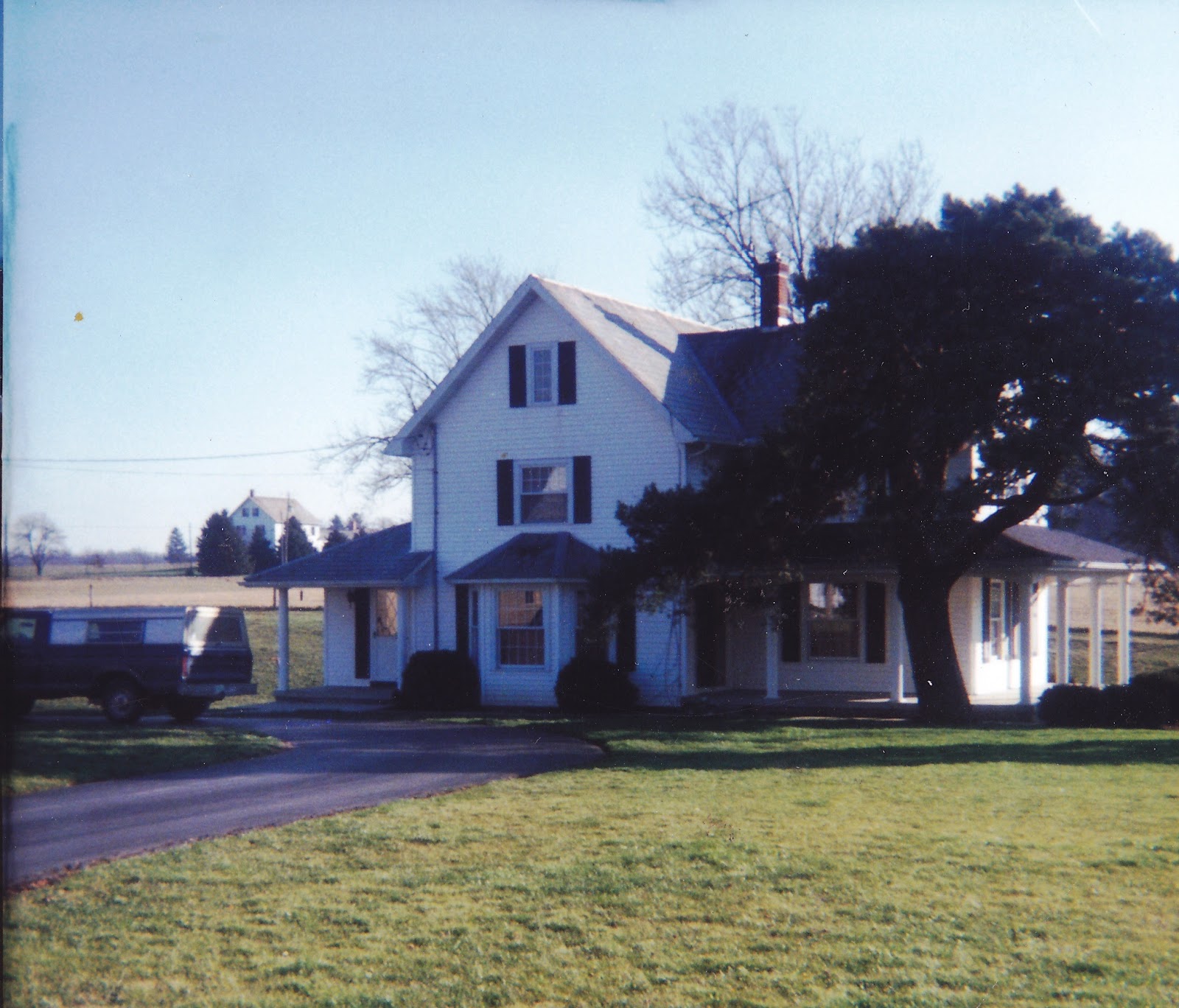
HomeKansasRd.jpg
Our former home on Kansas Road.
Right away, there was interest from several Amish families.  Five-plus acres, two large sheds, a nice heated steel building, a three-stall garage with a shop, and a large farmhouse—this was perfect for an Amish family.  On top of it, there was free natural gas—a big plus.  We showed the place a number of times, but weren’t getting offers that matched our asking price, so I went to talk with an Amish neighbor about it.  His name is Hammer Dan, and he has a keen interest in land sales and auctions.  We discussed my asking price, and he offered advice along with loaning me his large file of home sales in the area.  As we talked, he wondered out loud if I had given any consideration to a table auction.

A what?  A table auction.  He went on to explain.  A table auction is an inexpensive and effective way to sell a property.  No auctioneer or real  estate agency fees are involved.  All it takes is several interested parties who are willing to sit around a table, pass a tablet around the circle, and write in their bids.   As the owner, I would also sit at the table, and confirm the bids.  After talking with all the interested parties, and learning that they would welcome this kind of sale, we decided to do it.  So I asked Hammer Dan if he would consider convening the auction, and he agreed to do it.

So that’s what we did.  We set a date for thirty days later, and got the word out to all interested parties.  During that time, there were a couple more Amish families who came to look.  On the appointed day, we set up a table in the garage, and at the request of Hammer Dan, we also set up a table for hats.  Yes, hats.  Just in case you never noticed, Amish men are required to wear hats in public.  Maybe it never occurred to you to wonder about this.  It is part of their rules, but I haven’t figured out why.  When entering a house or building, they may take their hats off.  So that’s why we needed a table for hats.  We also had a table set up with water and cups.  This was appreciated.  Nerves were on edge—my own included—and having a cup of water was good way to settle them.

At the appointed time, we gathered around the table.  Dan began the proceedings by explaining the rules of the auction, and a description of the property.  He was professional about it, and I was impressed.  I sat there beside him, shaking in my boots, and hoping we’d get what we needed.  The biggest surprise was a neighbor up the road who had been through the house with his wife, but hadn’t shown much interest.  He came to the table too.  Along with him sat two other neighbors—a father and son-in-law who had a keen interest in the place, but wouldn’t offer enough to get it.  And then, there was a young man from down near Mt Hope.  He and his wife wanted it too.

The bidding began.  A yellow tablet started around the table.  Bidder one and his son-in-law were first.  They wrote down their name and the amount they were offering.  Bidders two and three upped the bid.  It came back to me and Hammer Dan.  All good.  So we started the next round.  Bidder one upped it.  Bidder two needed a break to confer with his wife.  (At the beginning, during announcements, we had mentioned that if a break was needed, we would allow it.)   Bidder two came back in, sat down, and upped the bid.  Bidder three looked at it and smiled.  He was out.   So the tablet went back to bidder one.  He hesitated, looking sweaty and nervous, but took the pen and wrote on the line.  Back to bidder two.
He looked at the tablet, wrote in his bid, and handed it to  me and Hammer Dan.  Seeing the amount, I felt relieved, and honestly, surprised.  The bid was now where I could accept it.  Back to bidder one.  He and his son-in-law whispered to each other, and after a long pause, he took the pen and wrote with it.  Back to bidder two.  He looked at the tablet, and passed it to me.  At this point, I thought bidder one was the winner.  But not so.  Bidder one’s mark on the tablet was a smiley face, and bidder two’s last bid took it.  The sale was over, and we were pleased.  Of course, not everyone could walk away happy, but there was a sense of peace about the whole thing.  Even though we didn’t quite get our original asking price, there were no fees involved, so it all turned out okay.

And that is a “table auction.”  For us, it worked out fine, because we were in the heart of an Amish community with a desirable property.  We feel blessed knowing that our former property is being enjoyed by a young Amish family who takes good care of it.  May they have many years happiness, and raise lots of cute little children in the old farmhouse on Kansas Road.

From Kidron, Ohio, we hope you have a wonderful weekend.  So long.


Saturday, November 14, 2015

Israel 4. From Nazareth to the Dead Sea

Our third day in Israel began again from our hotel in Tiberias on the southern shore of the Sea of Galilee.  We headed southwesterly, with Nazareth as our destination.  On the way to Nazareth the road lead through Cana.  You remember Jesus’ first miracle?  Sure you do.  At a wedding, He turned water into wine.  And guess what!  As we passed through Cana, there to our left was a store named “Cana Wedding Wine, The First Miracle Sovner Store” - a fine example of using an event that took place nearly 2000 years ago, to sell souvenirs.  (Sovner is how it was spelled.)


Nazareth is a hilly, bustling city today.  Roughly seventy thousand people live there, and the streets are crowded.  The population is mostly Palestinian Arab, with a breakdown of about 69% Muslim, nearly 31% Christian, and a tiny Jewish contingent.  
Historical evidence suggests that Nazareth, in Jesus day, was a tiny hamlet of perhaps 30 to 50 families, tucked away in a valley between the Galilean hills.  They were a rugged and poor people, who spoke with an accent different than their fellow Jews only 63 miles to the south in Jerusalem.  It seems that the hamlet had a reputation of sorts, which would explain why Nathaniel wondered out loud how anything good could come from Nazareth.  But isn’t that just the way God works?  He’s done it so many times in history - making an improbable or impossible situation turn into something amazing.  Think about Noah, Moses, Joseph, David, Daniel, and so many more, and now Jesus, born into poverty and growing up in the “West-Virginia” of Israel.


The purpose for our visit was to participate in a guided tour of an open air museum depicting life in Nazareth in the time of Jesus.  This was one of the places that Dad wanted to visit, but never had the opportunity.  It was developed in the 1990’s, several years after he and Mom had lived there.


Nazareth Village sits on a hillside surrounded by the city.  Stepping into it instantly takes a person back about 2000 years.  Dressed in clothes of the period, a little smiling boy clings to a swing, while behind him a man tends his sheep.  Further along the path a wine press is carved into the rock. There is a vineyard, olive grove, small fields that had been harvested, a lookout tower, and a small settlement.  Included in the settlement were a carpenter shop with a man plying his trade, and then a home where a woman sat spinning yarn from wool that had been dyed in many natural colors.  One large stone building that would have been shared by the community, housed a donkey-powered turnstile for crushing olives, and a press for squeezing the oil.  A bit further, we gathered together in the synagogue for additional explanations of community life.  There were other stone buildings and dwellings to walk through, before the tour ended in a store where all the money-laden tourists could peruse a large array of books, olive wood products, and souvenirs of every description.   

Donkey pushing the turnstile, crushing olives.

Shepherd

Women spinning yarn

Leaving Nazareth we wound our way right back past Mt Tabor.  Once again, I could not take my eyes from it.  It rises so distinctly from the plains, and stands nearly alone like a monument.  Passing by it, we continued to the southern tip of the Sea of Galilee where the Jordan River leaves the sea to continue its winding path south to the Dead Sea.  The Jordan itself was our destination, because there were a number of people in our group who wanted to be baptized.
For several months I thought I would be in that number.  Not that I felt a need to be baptized again, but I may never be here again, and it just seemed like it would be awesome to experience baptism in the Jordan - the river where John-the-Baptist had baptized so many people, including Jesus.  
I didn’t do it though.  First, there was a requirement to rent a white robe for 10 dollars (a minor stumbling block), but then the location was so commercialized.  I should have expected that.  Above the baptism site there was a plaza for purchasing food and souvenirs, a public restroom that required payment to use, and people everywhere.  The surroundings simply squelched the desire I had for an experience that I had hoped might be meaningful.  Bless the hearts of the many people who had the fortitude to ignore all the distractions, and go for the plunge.  

Baptismal area of the Jordan River


We traveled south then, to Bet She’an where lies the ruins of the first century Roman city of Scythopolis, located at the juncture of the Jezreel Valley and the Jordan River Valley.  If I were an archaeologist or historian, this would be the mother of all digs - the quintessential dream come true.  
I am neither.  However, the massive amounts of history and ruins in this place is amazing even to the novice.  Certainly one could spend many days combing through the ruins of what was once a bustling city.  


The Tel is in the background - once the site of a fortified city.
Scythopolis was the capital of ten cities known as Decapolis, and the only one on the west side of the Jordan River.  The most striking thing about this location is the hill.  It is shaped conically, like a volcano, and flat on top, making it the perfect location for a fortress city.  This hill is referred to as Tel Bet She’an, and many layers of civilization have been uncovered on the top.
In the days of King Saul, this land was controlled by the Philistines.  It was on Mt Gilboa, just to the west of Bet She’an, where Saul and his sons lost the battle to the Philistines, and Saul took his own life as he was about to be killed.   Read about it in I Samuel 31:1-13.  Their bodies were brought here to the Tel of Bet She’an by the Philistines, and hung on the city gates.  


Today the modern city of Bet She’an lies just to the south of the ruins, and is home to around fifteen thousand people. It is surrounded by thousands of acres of excellent crop land.  It’s worth going to ‘google images’ to see pictures of the Tel, and to get an aerial view of the city and surrounding land.


So much to see, but it was time to move south to the Dead Sea.  This is one place that strikes at the imagination of children and adults alike.  The one place in the world where the water is so salty that it is impossible to sink.  This was on my bucket list for Israel - Israel being at the top of the list, and floating in the Dead Sea in the sub-list.  That, and riding a camel.   


I’d like to include here a few lines I sent to my brothers as we made plans for the Israel trip.  It describes my interest in the Dead Sea.


Dear Family,


There is one Dead Sea.  On this great earth, there is only one.  Having already described my desire to ride a camel, I now wish to describe my  yearnings to float in the Dead Sea.


Some of you are not sure you want to go into the water of the Dead Sea.  I can scarcely comprehend this.  Think of it.  Nearly everything on earth comes in multiples, and nearly everything is repeated over and over all over the world.  Just look at McDonald's and Walmart.  But there is only one Dead Sea.  We can find a pool almost anywhere to go for a refreshing swim.  We can go east or west and ride the waves of the amazing oceans.  But there is only. one. Dead. Sea.  So for something to think about, here is a very incomplete list of things unique about the Dead Sea.


1) The salt content in this one-of-a-kind sea is nine to ten times greater than that of the oceans.


2) The salt content is so great that the human body cannot sink in this body of water.  In other words, even if you can't swim, you cannot drown in this sea - unless someone is "helping" you.  Based on experiences of my young childhood, I will keep a distance between myself and my older brothers.


3) The surface of the water is 1388 feet below sea level, making it the lowest spot on earth. If we want to get lower than that, we have to actually get in the water.  


4) It is one of the oldest recorded locations for a health resort.  Herod the Great was known to visit this place for the health benefits, but don't get your hopes up, he died anyway.
5) The benefits of this water to one's largest organ, namely the skin, are amazing.   Do you know that salt water tightens the skin?  And the saltier the better?   At our advanced ages, going for a dip in the Dead Sea seems like a no-brainer.  The only catch though, is that they don't recommend putting your head under water, and that's where most of the wrinkles seem to be.   There are however, healing lotions that are derived from the Dead Sea, that can be used on any part of the body.


So, will I be going for a dip in the Dead Sea?   ARE YOU KIDDING?   OF COURSE I WILL!  I've heard from someone who put his wee little fingers in the water, that it is "slimy".  Really?  That's the salt and minerals going to work on the skin.  Soap is slimy too, but we use it every day, and enjoy it.   I can think of other examples, but it's not necessary to waste any more time mentioning them.  This may be our one chance to experience the Dead Sea, and I for one am going in.


From the other brother.


* * *


And now here we were, driving along the coast of the Dead Sea.  Darkness was approaching as we pulled into the parking lot of the hotel, after driving through many miles of dry desert wilderness.  The float would have to wait until the morning.  But wait!  The hotel had a pool room.  Lo and behold, it had an indoor pool of Dead Sea water.  So some of us went in.  It was almost scary.  One thing for sure you don’t want to do is get this water into your eyes.  It is so potent, that your eyes will melt and slide right down your face.  No, just kidding!!  But they say it does give a very painful burning sensation.  I’ll take their word for it.  There is a technique to relaxing in the water without splashing.  You just slowly sit down and let your legs bob to the surface.   Now straighten out your body and lay your head back, and you are suspended on a soft bed of water.  What an amazing feeling!  But in the morning we would experience the sea itself.  Can hardly wait.  Off to bed.  See you in the morning.


We’ll pick it up right here next week, friends, and we’ll go for a dip in the Dead Sea.  So long.


Friday, November 13, 2015

Ladies Before Gentlemen

Ladies before gentlemen. Unless you are Amish.  It’s a cultural thing I guess—perhaps even a Biblical understanding for the plain folks.  The man is the head of the home, and the leader of the family, and this view is carried out in many aspects of Amish life.   I’ve often noticed that the men are generally ahead of the women.  Even the children walking to and from school will be grouped up in boys groups and girls groups, with the boy’s groups walking usually ahead of the girls.


schoolboys.jpg
Neighborhood Amish boys walking to school.


I work with an Old Order Amish man, so I decided to ask him about these things.  We know each other well enough that we can talk about most any subject—religion and faith included.


“Hey John, (not his real name) why do Amish  men always walk ahead of the women?”
“I don’t know... they don’t always.”
So I went on, “But that’s what I nearly always see, unless there are just two of them.  Sometimes I see a man and a woman walking side by side, but if they are in a group, the men take the lead.  And why do the Amish men always take the front seat in a two-seat buggy?  The men and boys will be in the front, and the women and girls will be in the back.  Why is that?  Is it a cultural thing, or a religious thing?”
“I don’t know,” he replied.  “That’s just the way it is.”


I wasn’t getting very far with my questions, so I took a different approach.  I gave John an example where he could fill in the blanks.  He had just informed me that the men don’t always walk in front.


“So John, if you and your wife go to visit some friends, and  you’re both standing at their door waiting to enter, who would go in first when the door is opened?”
“I would,” he said.
I nodded my head.  “That’s what I thought.”


Then I explained to John that I was raised to open doors for ladies.  By doing this, I am honoring the ladies and being a gentleman.  
He just looked at me with a blank stare, as if this was a foreign thought.  Maybe it was.  Maybe in the Amish culture it is not so much taught as caught.  And I don’t fault anyone for cultural habits.  We all have them.  As John says, “That’s just the way it is.”


* * * * *


Texting while driving is a no-no.  We all know it.  There are plenty of statistics and videos explaining how dangerous it is.  And really, I think we are all convinced.  However, many still do it, thinking that they can get away with it.  They are “smart” and “careful” about it.  They won’t be a statistic.  Please don’t think like that.  Please put the phone away while driving… unless you are driving a buggy.  I often see Amish teenagers texting while driving a horse and buggy, and that is relatively safe, because the horse knows the way.


amishtext.jpg
Amish teenager texting as he drives his buggy.


Friends, we’d like to continue our trip in Israel now.  Adios from Kidron, Ohio, where the men are homely, the women are beautiful, and the children are home for a baby shower.  Yep, we’re going to have one more sweet little grandbaby.  So long.


Saturday, November 7, 2015

Israel 3. Good Morning Tiberius


It's amazing what a good night's rest does for the body and soul.   We awoke refreshed and ready to begin the second day of our tour.   This was still a moment in which to pinch ourselves.   We were actually in Israel.  It wasn't a dream.


I pulled back the curtains of the hotel room, and the view from the 6th floor showed the Sea of Galilee stretching out in front of us.  Only a street and the row of buildings on the other side of it separated us from the water.  Seagulls were winging across the sea just like 2000 years ago.  A fisherman had his lines in the water across the way.  A couple of boats could be seen in the distance.  Pinch again!  The Sea of Galilee!  Jesus and the disciples!  Petey, Jimmy, and Johnny.


As we would  learn at each of our hotels, breakfast was served buffet style.  It was part of the package.   And this wasn't a small room with a waffle machine, cold cereal, a fruit dish, and pastries.  It was so much more.  And just like Mom had told us, a large variety of breads--fresh and warm, sliced fruits, hot dishes that we might expect for dinner at home, yogurt, cheese, and I don't remember what all.  Oh, yeah… and pickled fish.  


Today was going to be another full day.  It really surprised me yesterday how much could be crammed in.  But of course, I'm not complaining.  We wanted to see and do as much as possible, and with a little more than a week in Israel, we had to pack it in.  Boarding the bus a little before 8 A.M., we were ready to head out for the first stop.
IMG_1001a.jpg
Our driver Judah on the left.  Our guide Mickey on the right.  Our bus in the background.


An interesting mix of people were on the bus with us.  Our driver was a handsome Jewish man named Judah.  With black hair, dark eyes,  and olive-colored skin, he appeared to be from a long line of pure mid-east descent.  As mentioned previously, our guide was from Russia, with white skin like ours, just as a lot of the Israeli Jews have.  So many of them have migrated from European countries.  As for the tourists, two were Filipino ladies who make their home in  Canada, and five were Indians who have moved to the States from India.  And then the rest of us pale faces were from all over the United States.


Our first stop was Capernaum, at the north end of the Sea of Galilee.
This was a fishing village, and the home town of Andrew and Peter, James and John.  We visited the ruins of what is believed to be Peter’s home, the place where Jesus healed his mother-in-law.  The foundations are still there, and parts of an ancient synagogue are nearby.  When Jesus moved from the mountain town of Nazareth, he made this village the center of His public ministry.  If you remember, this is the location where the paralytic was lowered through a roof to reach Jesus.  You can read about it in Mark 2 and Luke 5.


While visiting Capernaum, we were given free time to walk around the ruins.  Now, animal lover that I am, I forthrightly noticed a lovely tabby cat near the foundation of Peter’s house.  Could it be…?  Nah.  Quite doubtful.  But turning the imagination loose for a moment, I could convince myself that the cat was a descendant of Peter’s cat.  This was a happy thought, and since the feline was resting comfortably, with an amiable expression on it’s face, I thought it would be nice to pet it.  One small stroke on the top of it’s head, and I barely escaped with minor scratches!  That ferocious cat doubled in size and turned on me like the miniature tiger that it was, and left me with the impression that bold Peter had indeed owned it’s ancestors.  “Get thee behind me Satan!”, was all I could think of right then.


IMG_1465.JPG
The cat at Peter’s house.


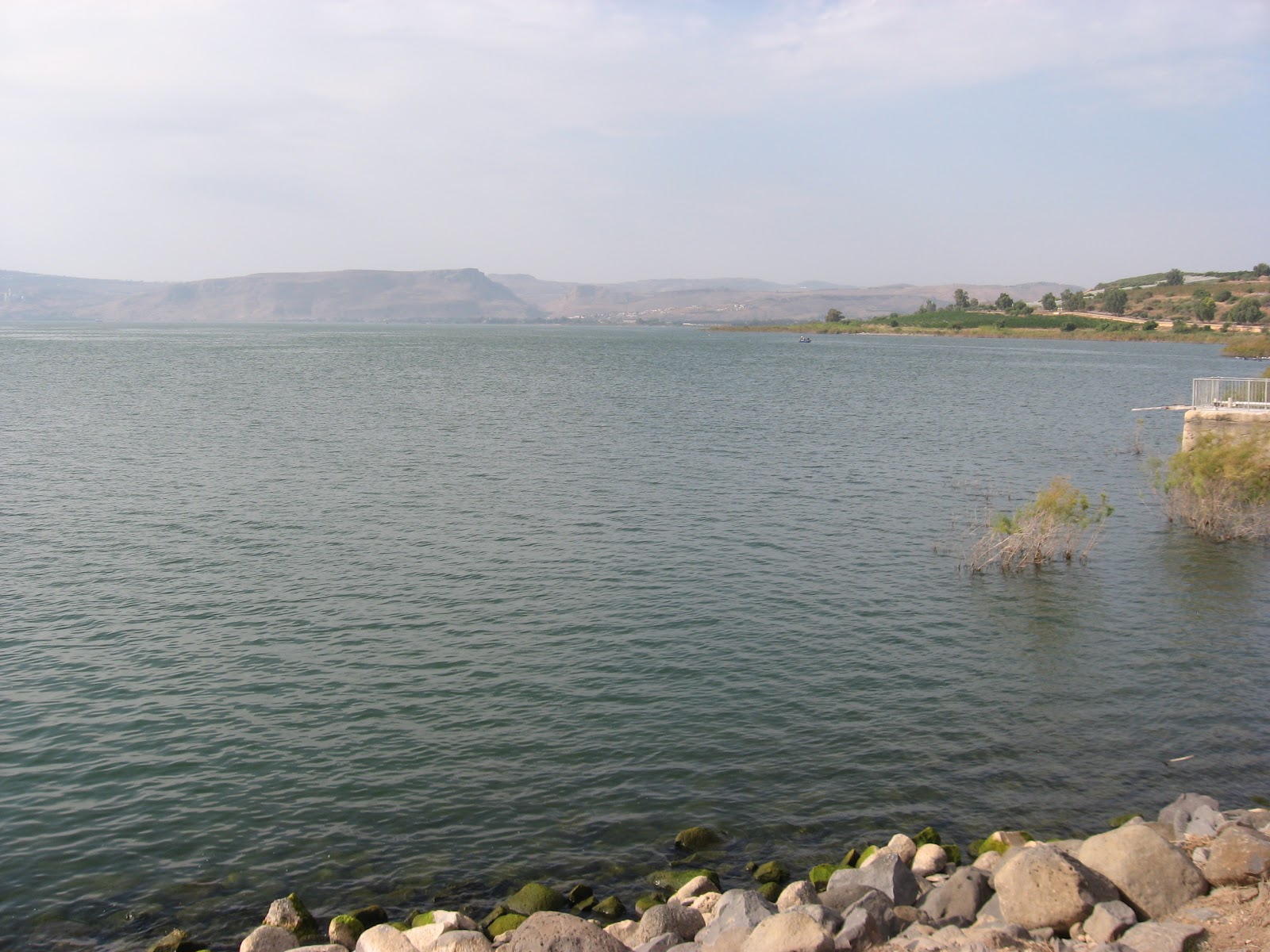
It seemed wise to leave the cat to it’s folly, and go for a little walk down by the water.  Standing at the edge of the Sea brought to mind many of the beloved stories we’ve known since childhood.  One could easily picture the disciples fishing, or Jesus walking on the water.  And that waterside walk remains as one of the most special moments of the trip.  


IMG_1466.JPG
The Sea of Galilee


The next stop on the journey was not far away.  The Mount of Beatitudes. The Book of Matthew records Jesus’ sermon in Chapter 5, 6, and 7.  Of course it is not known exactly where this took place, but tradition and the Catholic church have decided where it should be, and there is a large and beautiful, ornate, domed church built on the site, overlooking a hill that resembles--if you use your imagination--a natural amphitheater.  Tradition also puts this as the general area where Jesus fed the five thousand.


We headed further north then, towards Lebanon and Syria, to the Tel Dan Preserve.  In Jesus day, this area was the location of Caesarea Philippi, and the place where He asked the disciples, “Who do people say that I am?”  And after hearing the people’s speculation, he asked the disciples the same question.  And we know it was Peter who confessed what we must all confess, “You are the Christ (Messiah), the Son of the living God.”  The story is found in Matthew 16.  


We spent a fair amount of time here, and I don’t want to tire you with too many details.  But let’s list them briefly.  Here we walked a trail through a jungle, along the  Dan Spring, a clear, rushing stream emerging from the base of Mt Hermon.  It is part of the Jordan River headwaters.  We broke out into the open, and crested a hill where we viewed the ruins of Jeroboam’s podium which was used for worshipping a golden calf.  It’s sad to think how God’s people fell into idol worship and paganism, but it was also a reminder to look at ourselves, and not let things in our lives become gods.


Within view of the ruins were Syrian bunkers that overlooked the Hula Valley. We were encouraged to walk through the bunkers, so some us of did.  And most of us banged our heads on the iron frames that covered the bunkers at regular intervals.  Those lacking hair were able to show off their “war” wounds for the next several days.   
Just to be clear, we were in the Golan Heights, land controlled by Syria until 1967.  The bunkers were used by the Syrians to fire sniper shots at Israeli citizens in the Hula Valley below.


The trail circled us back around to more ruins.  We stopped by the Middle Bronze Gate, that guards the ancient Tel of Dan.  It is a large edifice constructed of mud bricks, dating all the way back eighteen centuries BC.  It is covered by a canopy now to preserve the bricks from further deterioration.


You know, it took me a while on the trip to figure out what a Tel is.  I heard the term at various locations, and assumed it meant city.  Tel Aviv, Tel Megiddo, Tel of Dan.  What it is, in case you are still wondering, or missed the memo like me, a Tel is a hill or mound that gets larger and taller with each layer of civilization.  Remember Tel Megiddo, and the 26 known layers?  Yeah.  When one civilization crumbles due to war or earthquake,  the rubble was leveled, and the next civilization built on top.  Hope this helps.


Then we circled even further to the Grotto of Pan.  This was a center of pagan worship.  In the grotto, or cave, there was once a large spring flowing with an abundance of water.  Babies would be thrown into this water as sacrifices.  If the babies disappeared and did not reappear, they believed that the sacrifice was accepted by the gods.


Our next stop, took us further south and closer to the Syrian border.  If I remember correctly, this was not on the planned itinerary.  However, it was important to our guide, and an important place for the Israeli people of today.  
In 1973, on a mountainside in the Golan Heights, a great battle took place.  The Syrians were attempting to invade territory that Israel controlled since the six-day war in 1967.  The odds were greatly in favour of Syria, but the Israelis won the battle, and have turned this location into a battle heritage site called Oz 77.  There are still disabled tanks sitting around.  What got me was that we were very close to edge of the demilitarized zone between Israel and Syria.  In fact, as we looked across the valley into Syria, we heard some rumbling.  Mickey informed us nonchalantly that we were hearing the war in Syria.  But not to worry.  They “are fighting each other.”  They’re not sending any missiles into Israel.”   He went on to request that we wait “a day or two before posting pictures of this site on Facebook.”  He said it might scare our relatives to find out how close we were to Syria.  But we trusted him, and knew for certain that he would not take us into a dangerous situation.  Let me remind you--it is more dangerous to live in America than Israel.


And then we headed back west toward the beautiful Sea of Galilee.  On a hill above the northeast shore of the sea, we visited the location of Bethsaida.  The city no longer exists, but the ruins are here, and are currently being excavated by archaeological students.  This was where Jesus healed a blind man, among other miracles.  But he was not fully accepted here either.   It is one of the cities he pronounced  “Woe” upon, for their lack of belief.  Matthew 11:21.

israel 465.jpg
Looking across the hills from the ruins of Bethsaida, it is possible to see a little sliver of the Sea of Galilee at the north end.


That pretty much wrapped up our day.   The sun was setting beautifully across the Sea of Galilee as we left Bethsaida, and the bodies were tired and hungry.  It was time go back to Tiberias and call it a day.


And that’s all for today from Kidron, Ohio.  Hope you have a wonderful weekend.  So long.


Black Hats and Pickled Veggies

A few days sure can make a difference.  During Monday’s walk, many trees were still near the peak of color.  The setting sun was kissing the leaves with a glorious glow.  I’ve said it before, and I’ll say it a thousand times; only God can paint a picture like that.  And then to top it off, the simultaneous full moon rising while the orange sun was setting, caught me by surprise.  What a sight!  Can’t believe how often I’m still surprised by the beauty that surrounds us.  God must take great delight in displaying His awesome creativity.  

Joe Zook farm.

On my walk last evening the views were different.  In the past few days we've had rain and wind, and there is a marked change in the air and in the scenery.  As I walked along Zuercher, Alexander Troyer, an Old Order Amish man, was out near the road with a wheelbarrow full of horse manure that he was distributing on the pasture.  I stopped to chat, and the conversation went directly to the weather.  This is typical for men who spend a lot of time outside.  Sorta makes me think of the song by Randy Travis.  A few of the lines go like this:


“I’m gonna love you forever, forever and ever,
As long as old men sit and talk about the weather,
As long as old women sit and talk about old men.
I’m gonna love you forever, forever and ever, amen.”


But that’s what we do, we talk about the weather, and I mentioned to Alex that it sure feels like fall.
“Yes it does,” he replied.  “Some people are saying we’re going to have a really hard winter, and others say it’s not going to be bad at all.”
Glancing at the gray sky, he shrugged his shoulders philosophically.
“I don’t know what winter will be like, but when spring comes, it’ll be done.”
I had to agree.  The woolly worms aren't that good at making predictions either.  If we see a few dark worms, we say it will be a hard winter.  Old wives tale.  Another “predictor” is how high the hornets build their nests in the trees.  High nests mean lots of snow.  Last fall, there were some high nests, but one group of hornets didn’t get the message.  While mowing the overgrown pasture next door, I nearly drove into a large nest that was less than two feet off the ground.  So what will winter be like?  We’ll know when spring comes.  Around here though, we have a pretty reliable weather predictor; the Amish men are beginning to switch from straw hats to black hats.  This is a sure sign that cold weather is on the way.


* * * * *


A few hours ago I stopped over at John Miller’s house where I purchase baked goods—usually a pie—nearly every week.  They are a Swartzentruber family, and there are kids all over the place.  Today I asked the young lady how many children are in their family.  
“Fourteen,” she said.
I felt my eyes getting big, and then I said something obvious like, “Wow!  That’s a lot of children!”  She smiled, but didn’t reply.
Last week John met me halfway to the house, and when I asked him what kind of pie they have, he replied, “We have niss pie today.”  Guess I looked bewildered, so he went on. “It has nuts on top.”
“Oh, you mean pecan pie?”
Now he looked a bit bewildered, but he went on.
“Niss pie.  Some people use pakin nuts, and sometimes hickory nuts.”
Juanita was with me this time, and she understood.  The Amish word niss is close to the Swiss word nuss, and that means nut.  Well, she ought to understand.  Her momma was a Nussbaum.  In Swiss, that means nut tree.
“Well, if it’s pecan pie, I’d like to try it.”
It was pecan pie alright, and it was delicious!  One of the best.  It wasn’t so heavy and sweet like some pecan pies are.
Today, I purchased a pumpkin pie.  We’ll see how that one tastes.


* * * * *


A few years ago we raised a batch of chicks so we could have our own farm-raised eggs.  About half of the chicks were roosters, so we raised them too, for table fare.  As it turned out, we didn’t need very many, so we decided to give some to a Swartzentruber Amish family who lived nearby.  They eat a lot of chickens, and do their own processing, so we thought they’d probably appreciate them.  We didn’t want anything in return, but they insisted on giving us some freshly canned, pickled vegetables.  And they were delicious!


Vinegar and sugar are the main ingredients for pickling vegetables, and just about anything else can be pickled too.   Beets, eggs, cucumbers, pigs feet (never tried them), and more.  For thousands of years, pickling has been used to preserve food.  Pickled herring(fish) is a delicacy in some parts of the world, and in some cultures.

Now, to continue our trip to Israel. Come along with us if you wish.
So long.